Choosing the Right Tow-Behind Seeder for Your Needs
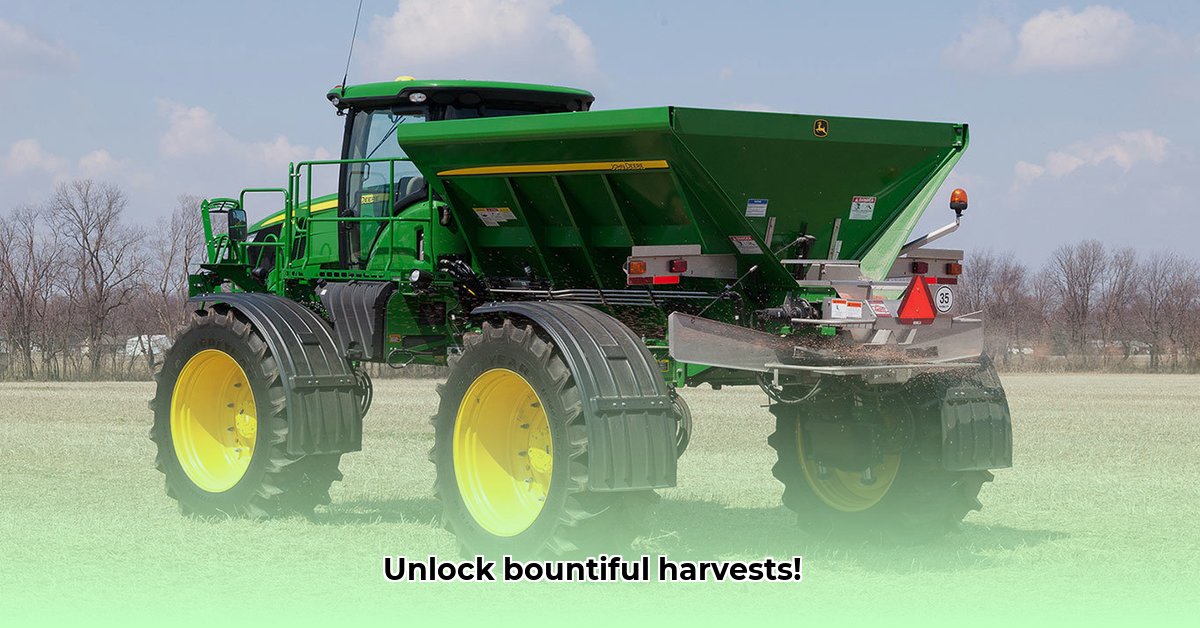
Selecting the appropriate tow-behind seeder for your tractor is a crucial step towards achieving bountiful harvests. This decision hinges on several factors, ensuring both efficiency and cost-effectiveness. Before exploring specific models, let's define your requirements. What size is your land? What kind of terrain are you working with? Understanding these aspects will guide you toward the most suitable spreader for your operation, regardless of whether you're a small-scale farmer or a dedicated home gardener. A mismatched spreader is like using a tiny paintbrush to paint a large wall; it's inefficient and frustrating. For more information on choosing a seeder, check out this helpful resource: Seeder Selection Guide.
Assessing Your Land and Terrain
The size of your land significantly impacts the required hopper capacity (the amount of seed the spreader can hold). Larger fields necessitate spreaders with larger hoppers, minimizing refills, and maximizing efficiency. Similarly, terrain plays a crucial role. Rolling hills or uneven ground might require a spreader designed for adaptability and stability. Adjustable spread widths are also essential, allowing for customized dispersal across varying field conditions. Do you need to cover large swathes of land quickly or focus on precise placement in smaller spaces? This question shapes your spreader choice immensely.
Understanding Spreader Types
Several types of tractor-mounted spreaders offer unique advantages:
Broadcast Spreaders: Ideal for large, relatively flat areas, these spreaders cover a wide area efficiently. However, wind can affect the evenness of seed distribution.
Spinner Spreaders: Employing a spinning disc to distribute seeds, spinner spreaders offer versatility and adaptability to various terrains. However, precision might be slightly less compared to other options.
Gravity Feed Spreaders: These simple and reliable spreaders are perfect for smaller areas or larger seeds. Their straightforward design comes at the cost of potentially higher labor requirements.
Precision Spreaders: Representing the high-tech end of the spectrum, precision spreaders utilize GPS and other technologies for pinpoint accuracy, especially valuable for large-scale operations. The advanced technology comes with a commensurate increase in cost.
A Step-by-Step Guide to Using Your Tractor Spreader
Using your tow-behind seeder effectively involves a series of crucial steps:
Calibration: Accurate calibration is paramount for uniform seed distribution. Your owner's manual provides detailed instructions; meticulous calibration prevents wasted seed and ensures even germination, resulting in a better yield.
Secure Attachment: Correctly attach the spreader to your tractor's three-point hitch. Double-check all connections to guarantee both secure attachment and operator safety – this is the foundation of any successful seeding operation.
Hopper Filling: Carefully fill the hopper with the required seed, avoiding overfilling to maintain accurate spreading. Overfilling increases inaccuracies and potential seed wastage.
Settings Adjustment: Adjust spreader settings according to your specific needs and manufacturer's recommendations. This includes spread width and seed dispensing rate, both vital factors ensuring optimal results.
Seeding: Drive your tractor at a consistent speed, slightly overlapping passes to ensure complete coverage of the area. Maintaining a steady pace leads to even seed distribution, crucial for uniform plant growth and a better harvest.
Maintaining Your Seeder: A Guide to Longevity
Regular maintenance significantly extends the lifespan of your seeder, minimizing repair costs.
Cleaning: Thoroughly clean the spreader after each use, eliminating leftover seeds or debris. Cleaning prevents blockages and potential damage, maximizing the working life of your valuable investment.
Lubrication: Properly lubricate moving parts to prevent wear and tear, a simple preventative measure that yields substantial long-term benefits.
Storage: Store the spreader in a dry, protected location to prevent damage from the elements, safeguarding your equipment against rust and other environmental hazards.
Weighing the Pros and Cons: Is a Tractor Spreader Right for You?
| Feature | Pros | Cons |
|---|---|---|
| Efficiency | Covers vast areas quickly and efficiently | Higher initial investment |
| Even Distribution | Consistent seed distribution across the land | Requires careful calibration and regular maintenance |
| Precision | Some models offer highly accurate control | Steeper learning curve for beginners |
| Cost-Effectiveness | Reduces labour costs over time | Significant upfront cost |
Choosing a Seeder for Small-Scale Organic Farming
Choosing a tow-behind seeder for small-scale organic farming requires careful consideration of specific needs. The goal is to find a balance between precision, efficiency, and alignment with organic farming practices.
Key Considerations:
Farm Size and Crop Needs: The scale of your operation directly influences the required capacity and features.
Hopper Capacity and Seed Plate Versatility: These factors impact efficiency and adaptability to different seeds and crop requirements.
Accurate Seeding: Precise planting minimizes waste and promotes even germination, crucial for organic farming’s focus on yield and reduced environmental impact.
Durability and Construction: High-quality construction translates to longer lifespan, aligning with sustainable practices and reducing replacements.
Broadcast vs. Drop Seeders: For small plots, drop seeders offer superior precision, minimizing waste and enhancing germination rates.
Budget and ROI: While initial investment is significant, the long-term benefits, including reduced labor and increased yields, justify the cost.
Regular maintenance is vital for maximizing the lifespan and performance of your seeder. Following the manufacturer’s guidelines for cleaning, lubrication, and storage ensures your investment remains productive and efficient. A well-maintained seeder is an investment in a successful and sustainable harvest.